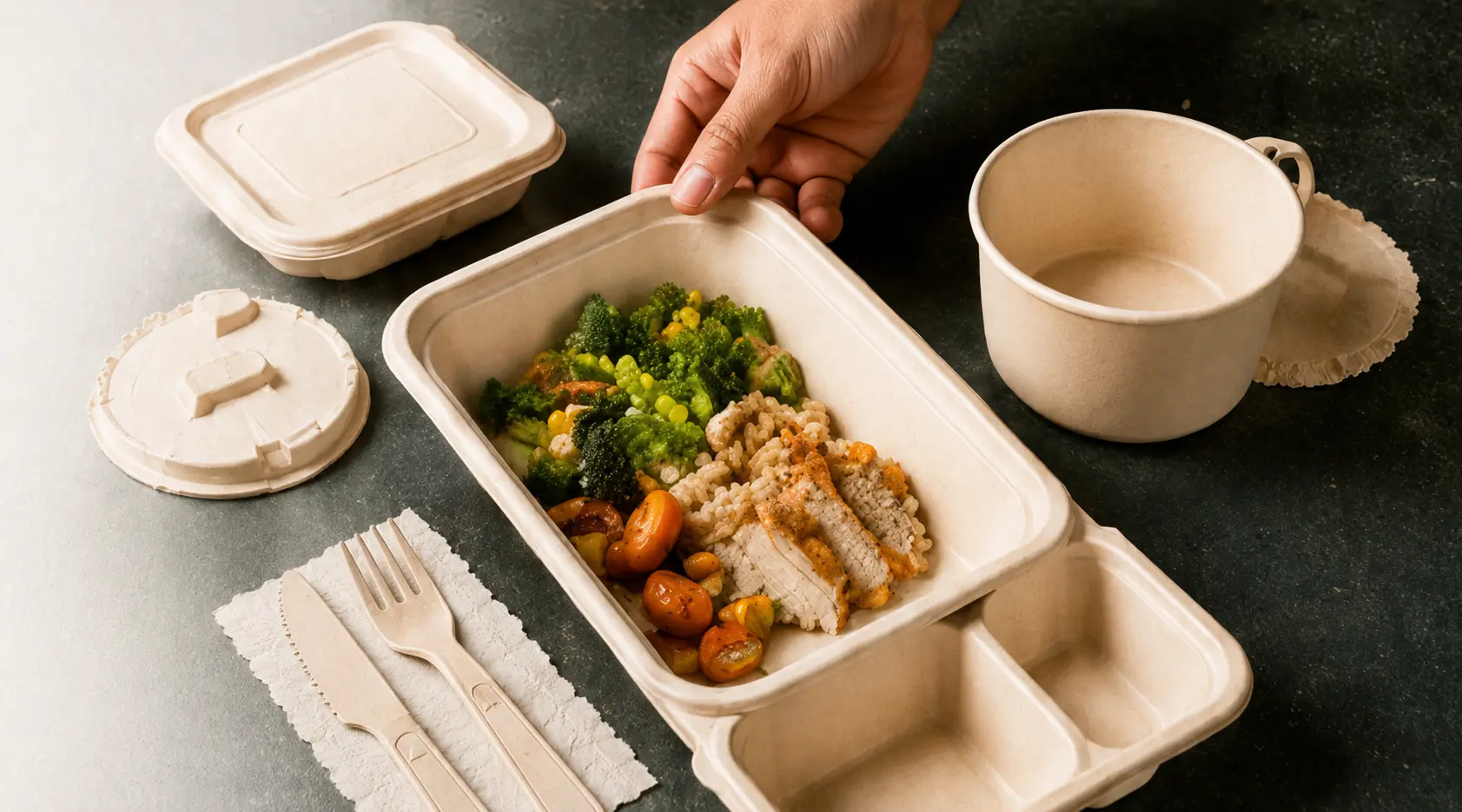
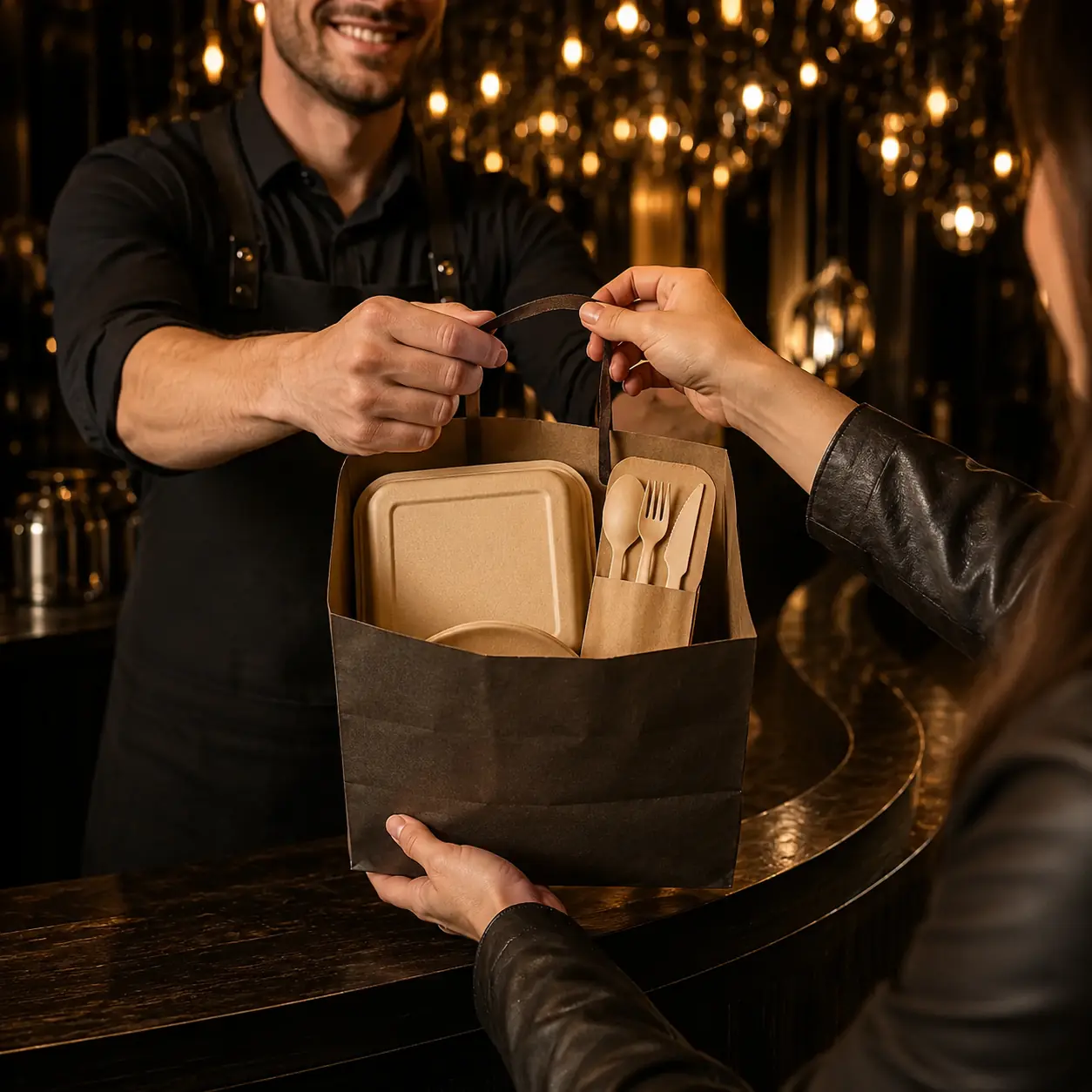
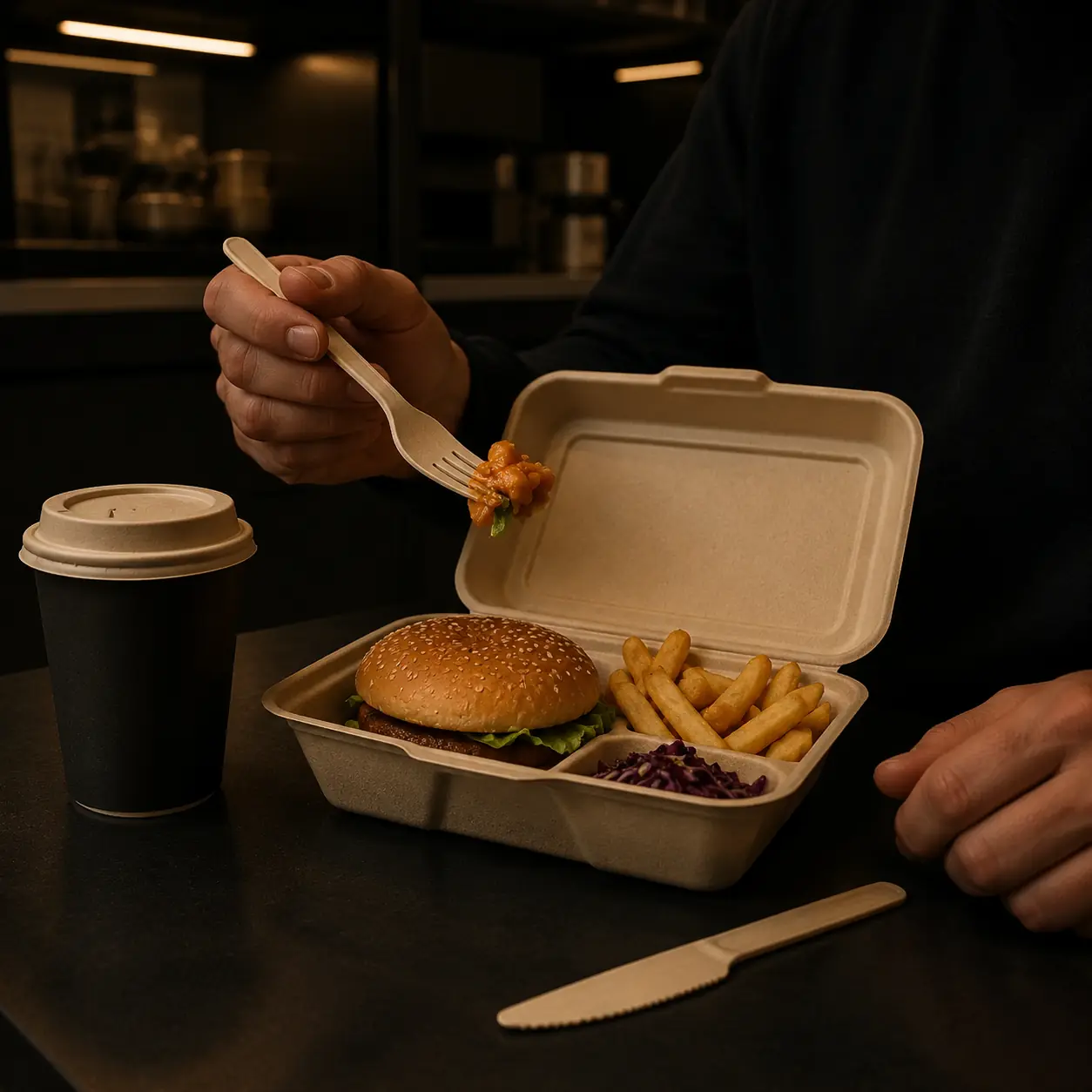
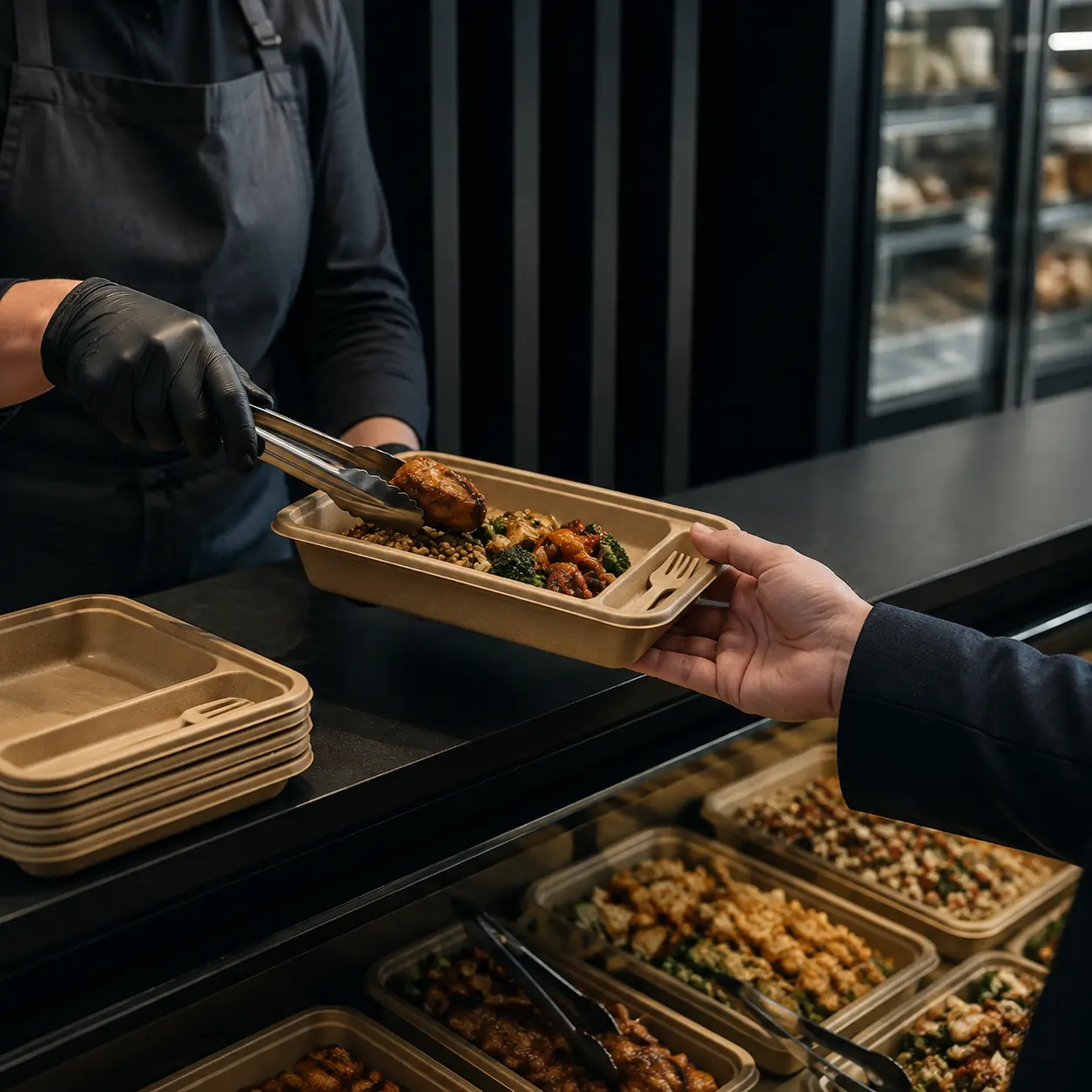
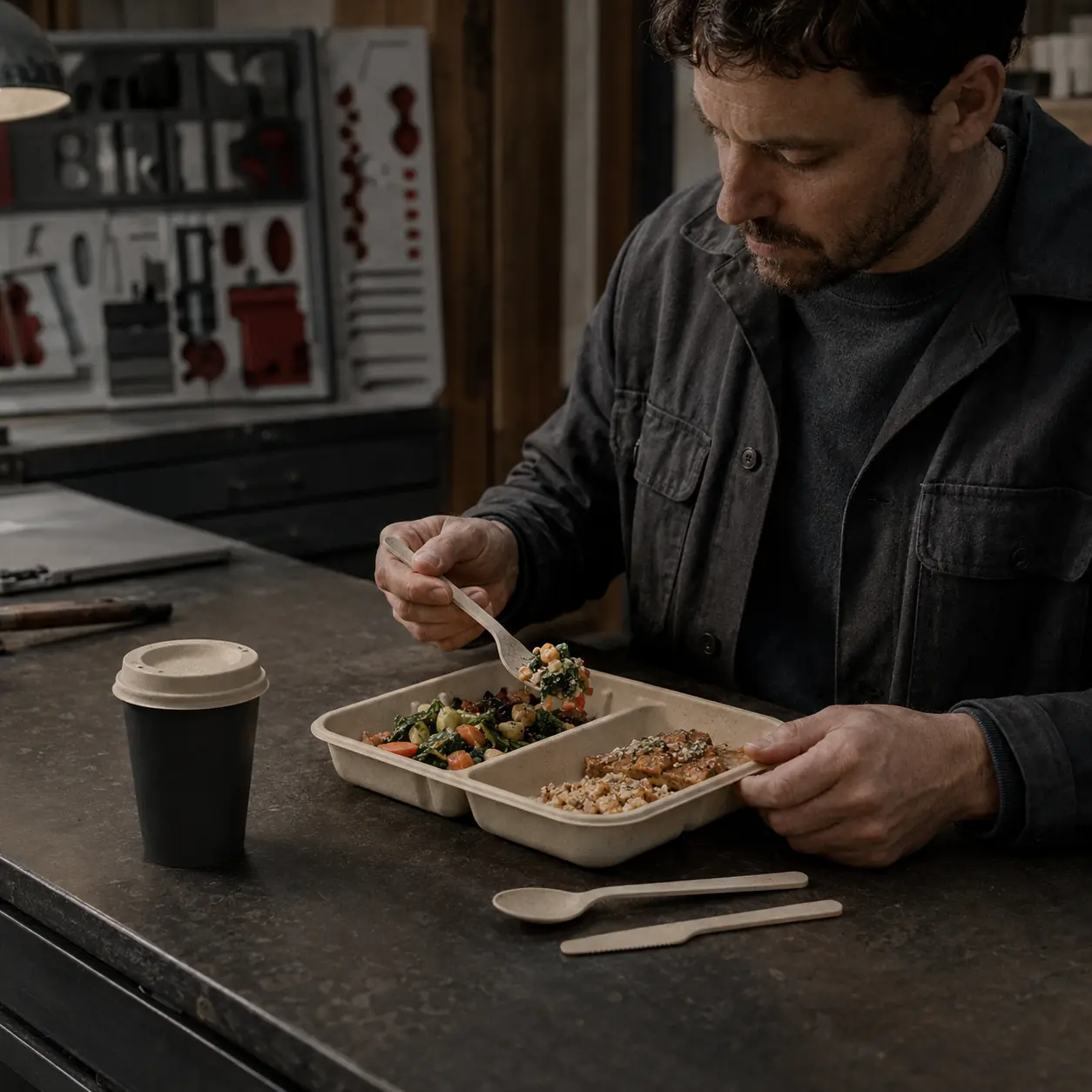
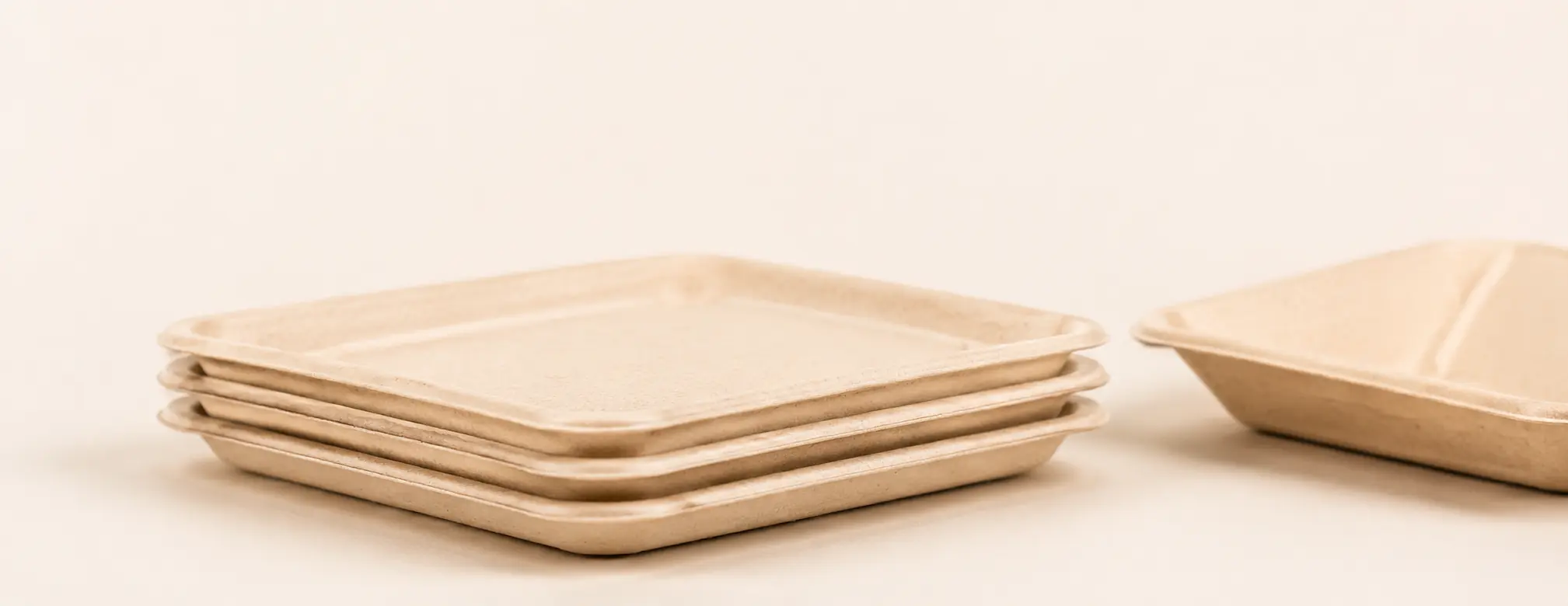
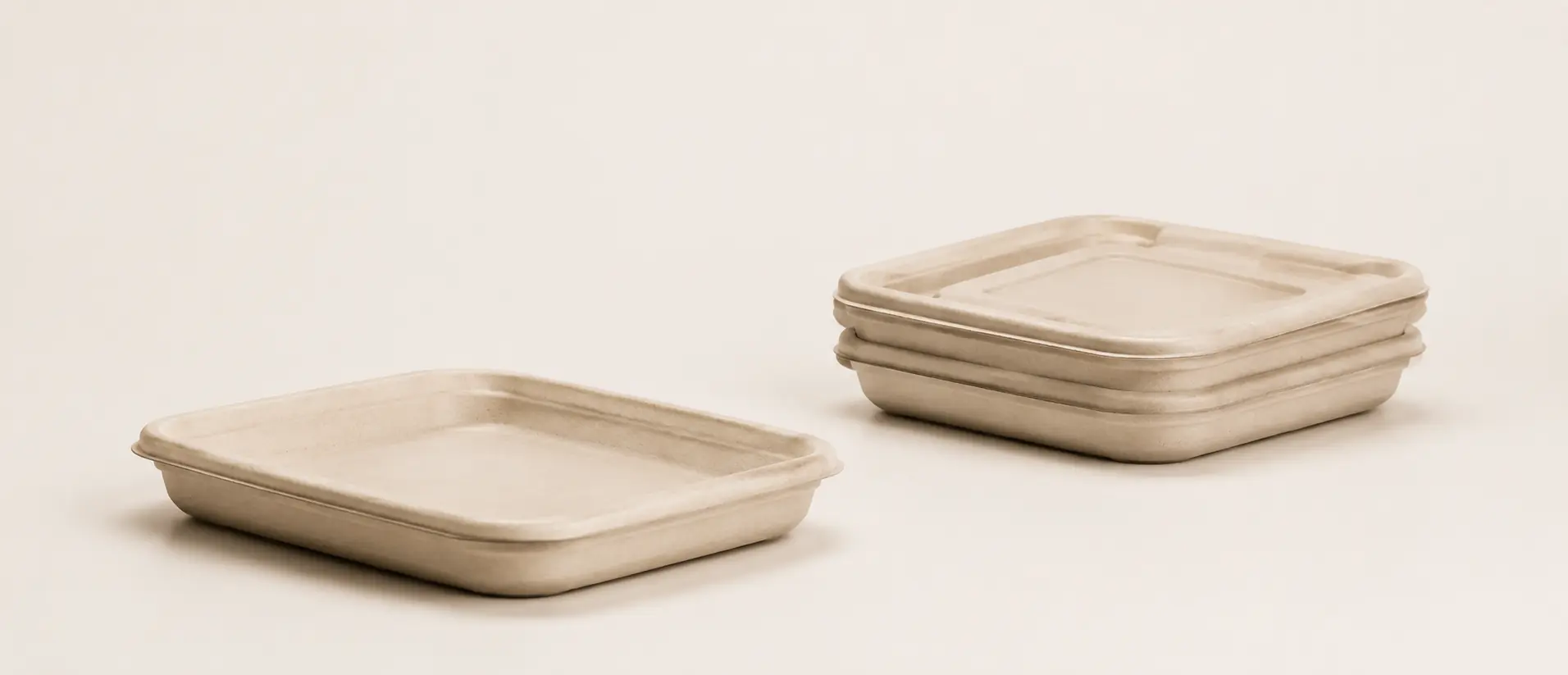
Custom Dry-Pressed Plant Fibre Tableware
Cutlery, plates, lids and custom parts in bamboo pulp, bagasse or tailored blends—with OEM tooling and documented production.
Four core product lines
Packaging solutions for a more sustainable future for HORECA, Retail and Industrial grade.
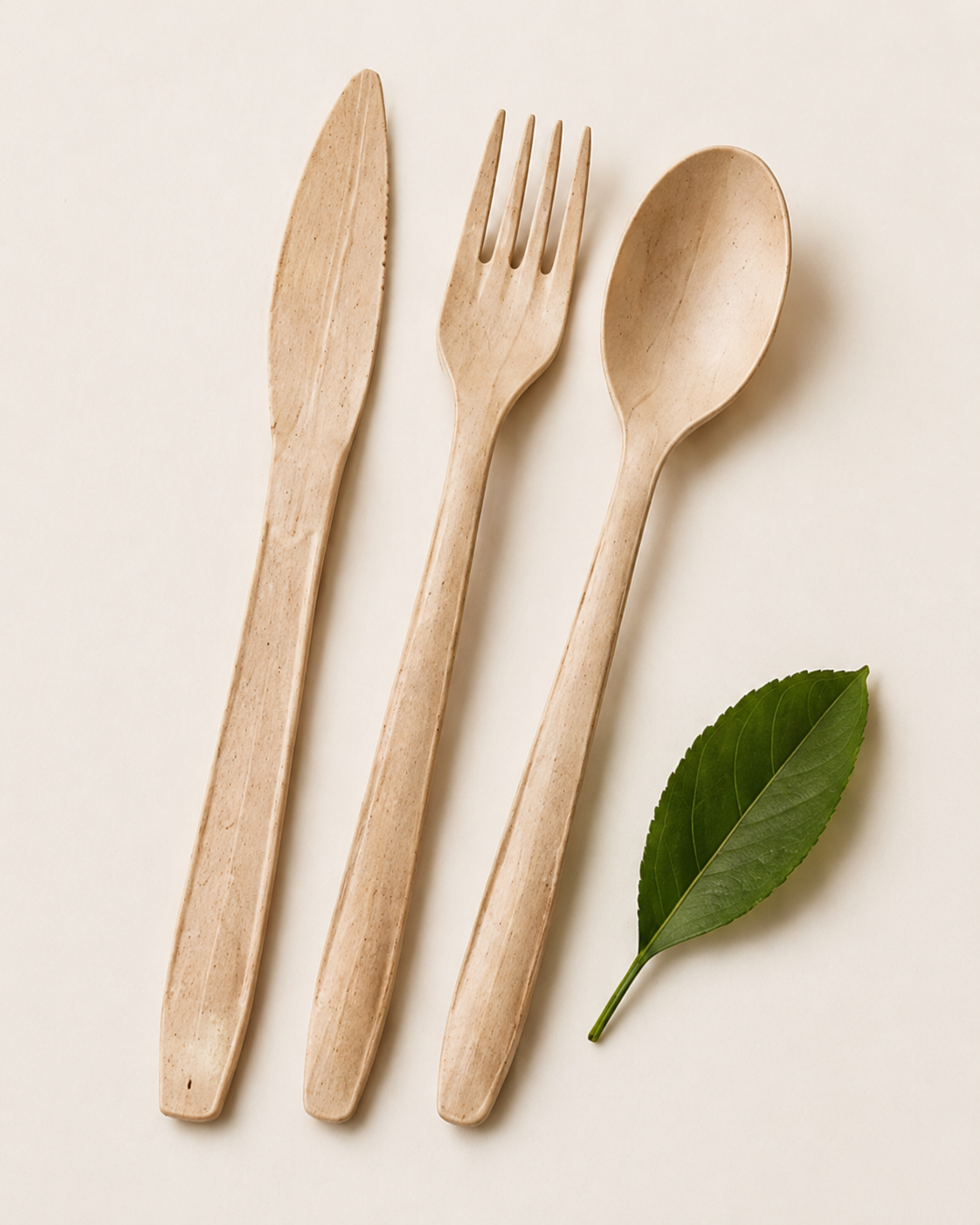
Cutlery
Natural fibre alternatives for modern dining needs.
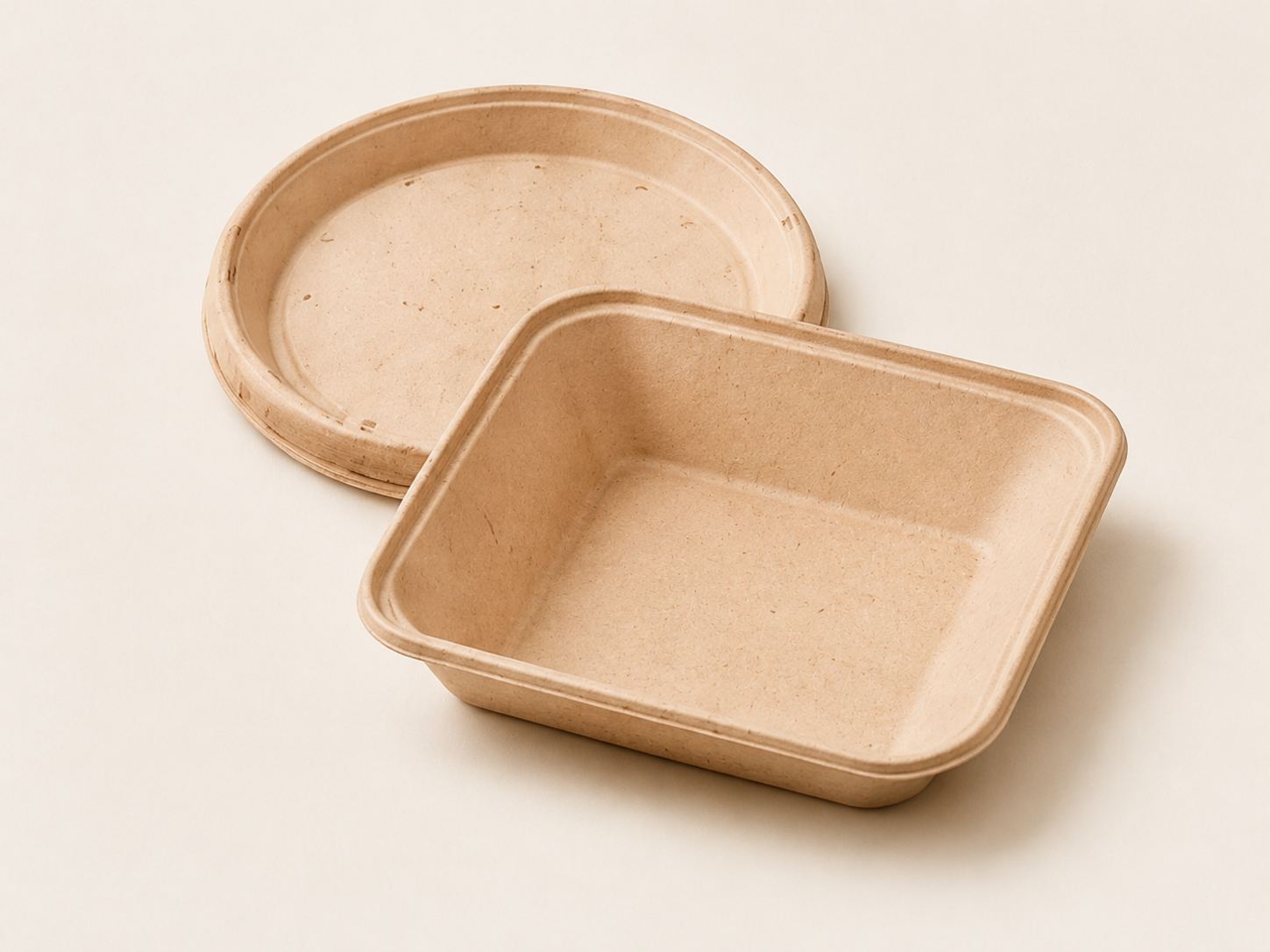
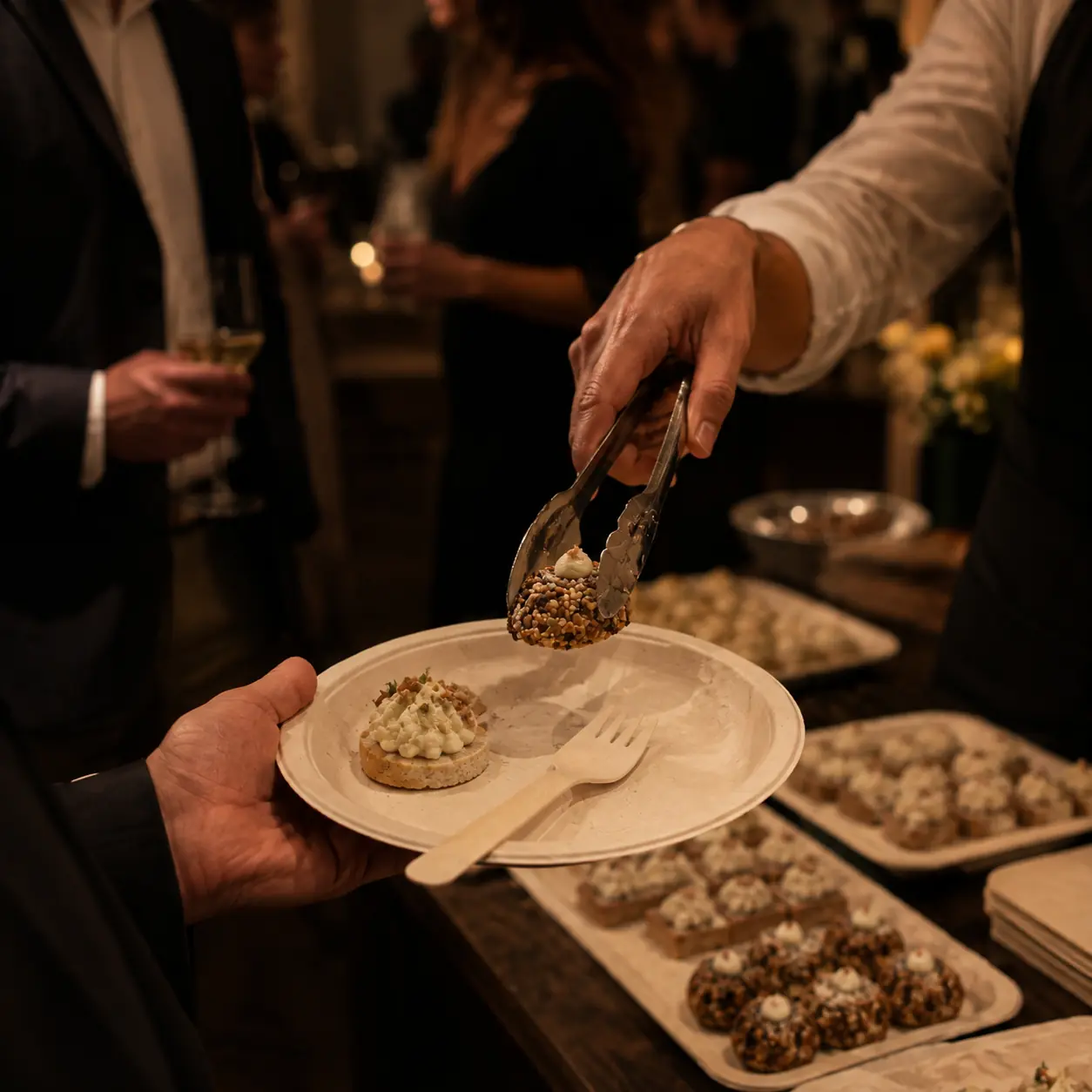
Plates & Dishes
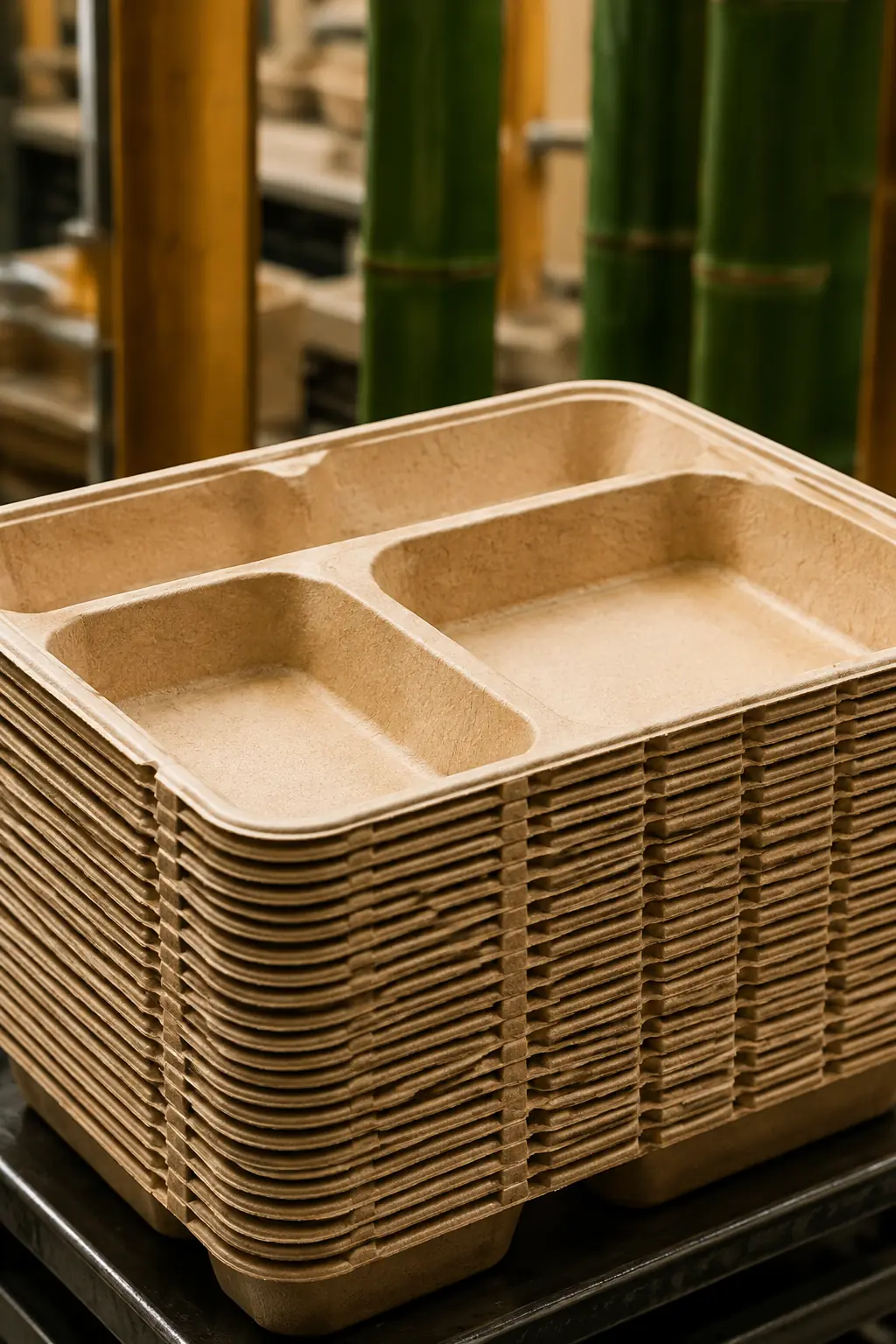
Dry-pressed fibre plates and dishes in round, square and custom dining formats.
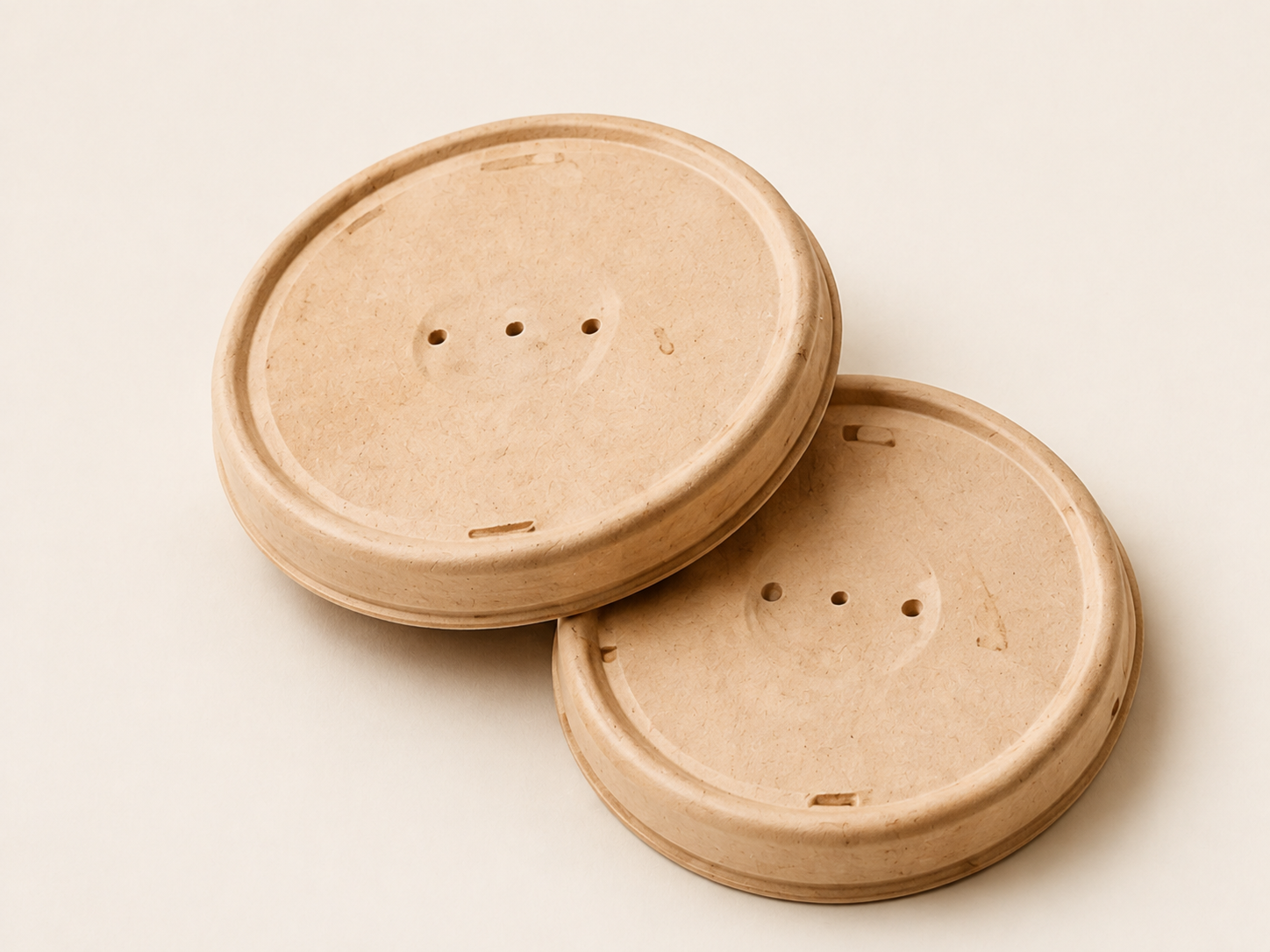
Cup & Can Lids
Dry-pressed fibre lids for snack can, tube and milk powder can applications.
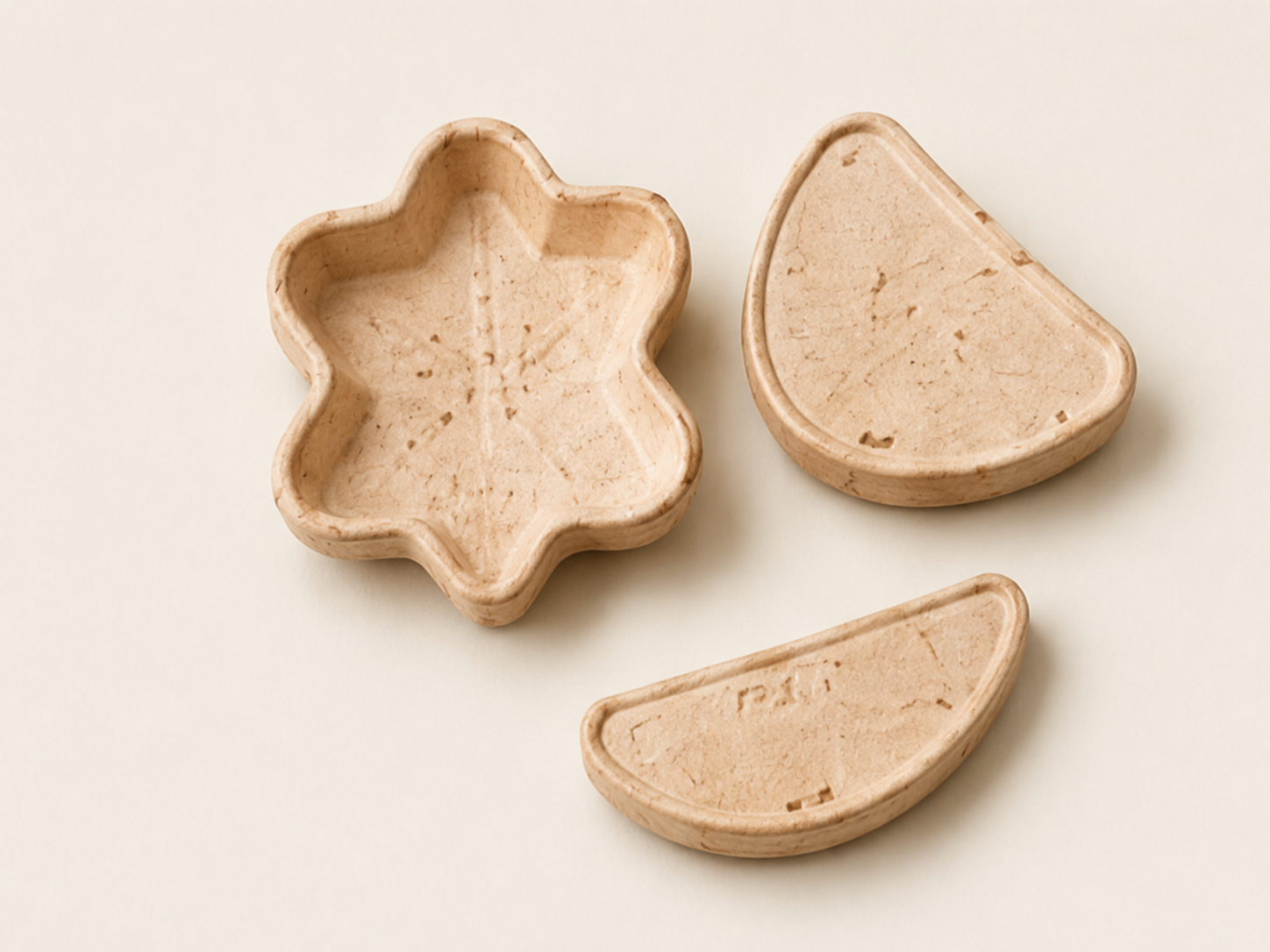
Custom Shapes
Custom dry-pressed fibre parts for bespoke shapes and special applications.
Third-Party Tested. Transparent. Documented.
We provide verifiable documentation from internationally recognized organizations to support your compliance and market access.
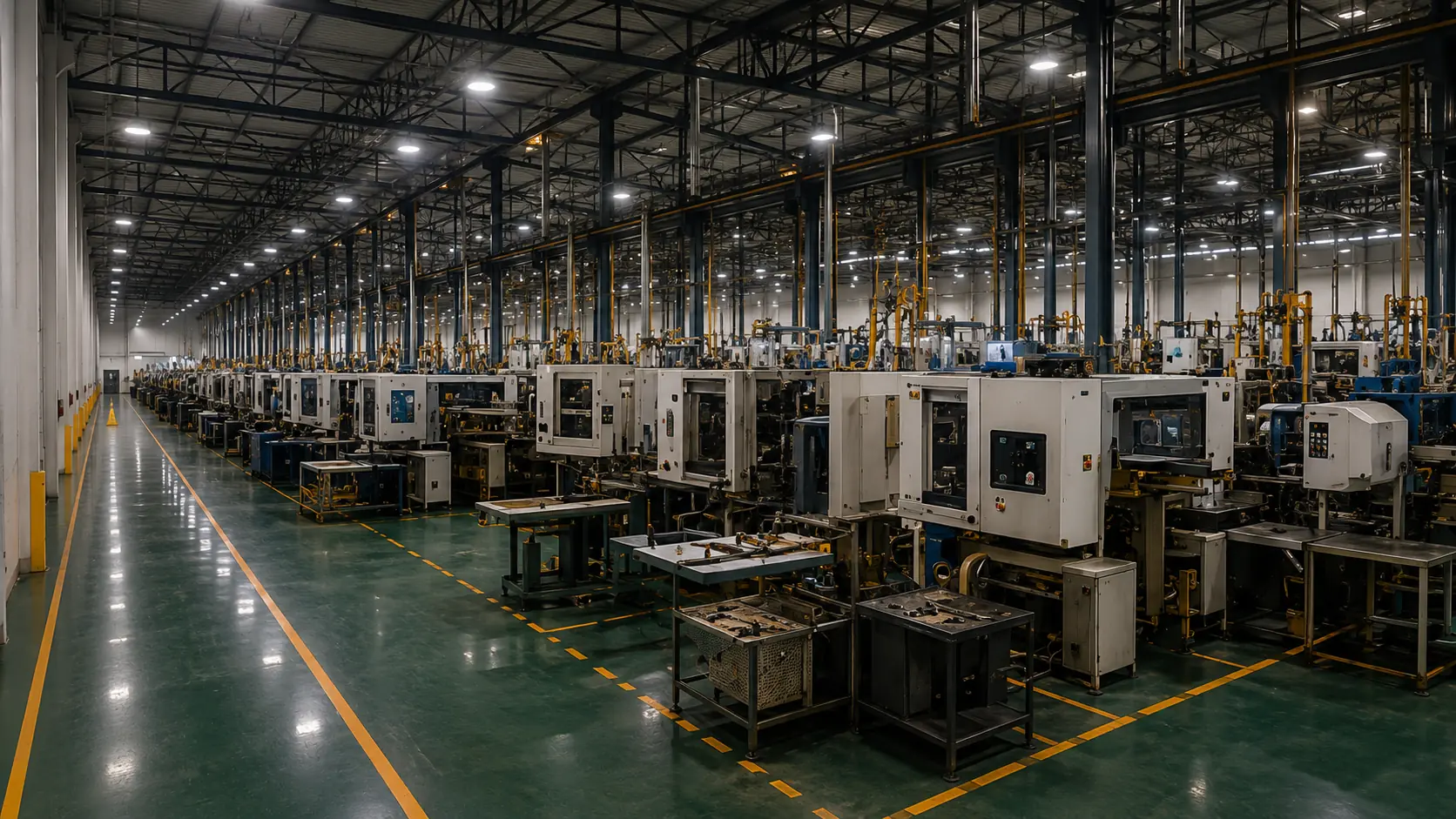
DRY-PRESS MANUFACTURING PROCESS · 06 STEPS
How Dry-Pressed
Fibre Tableware
Is Made
A six-stage manufacturing flow from fibre preparation to shipment-ready tableware.
01
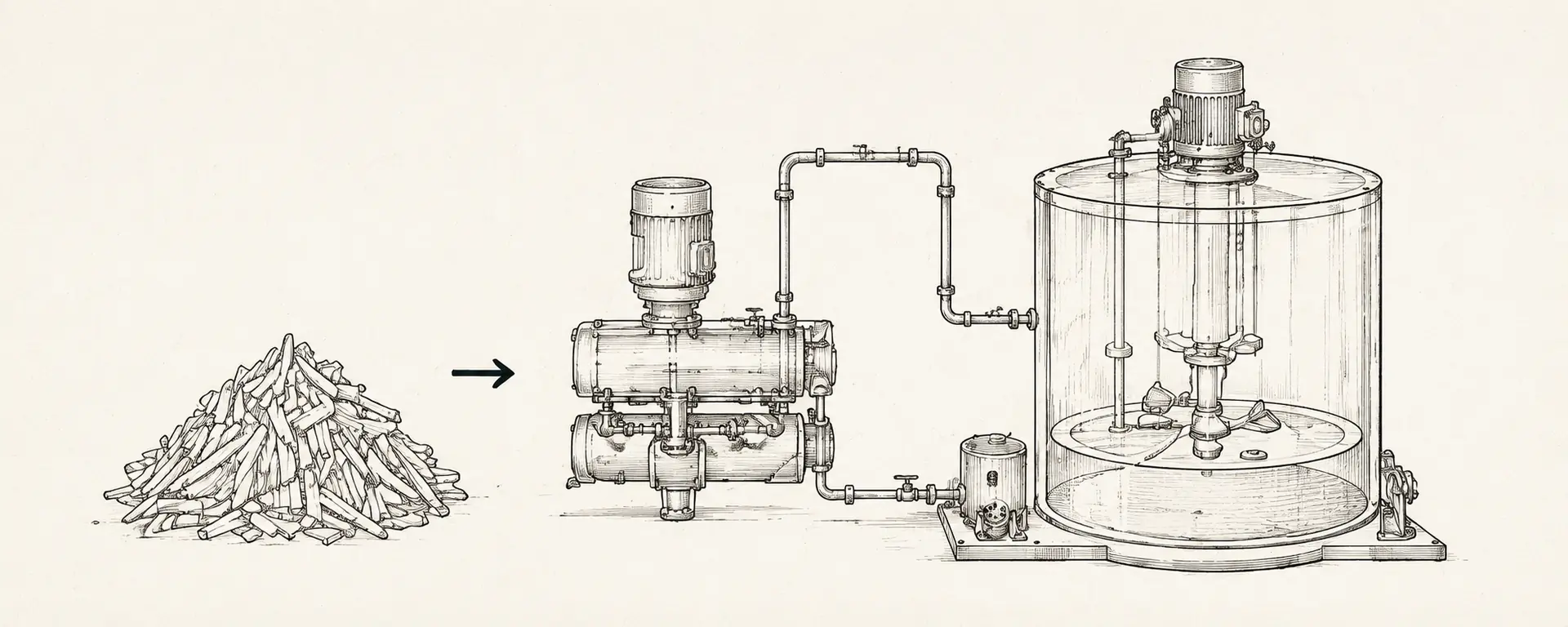
Fibre Selection, Blending & Pulping
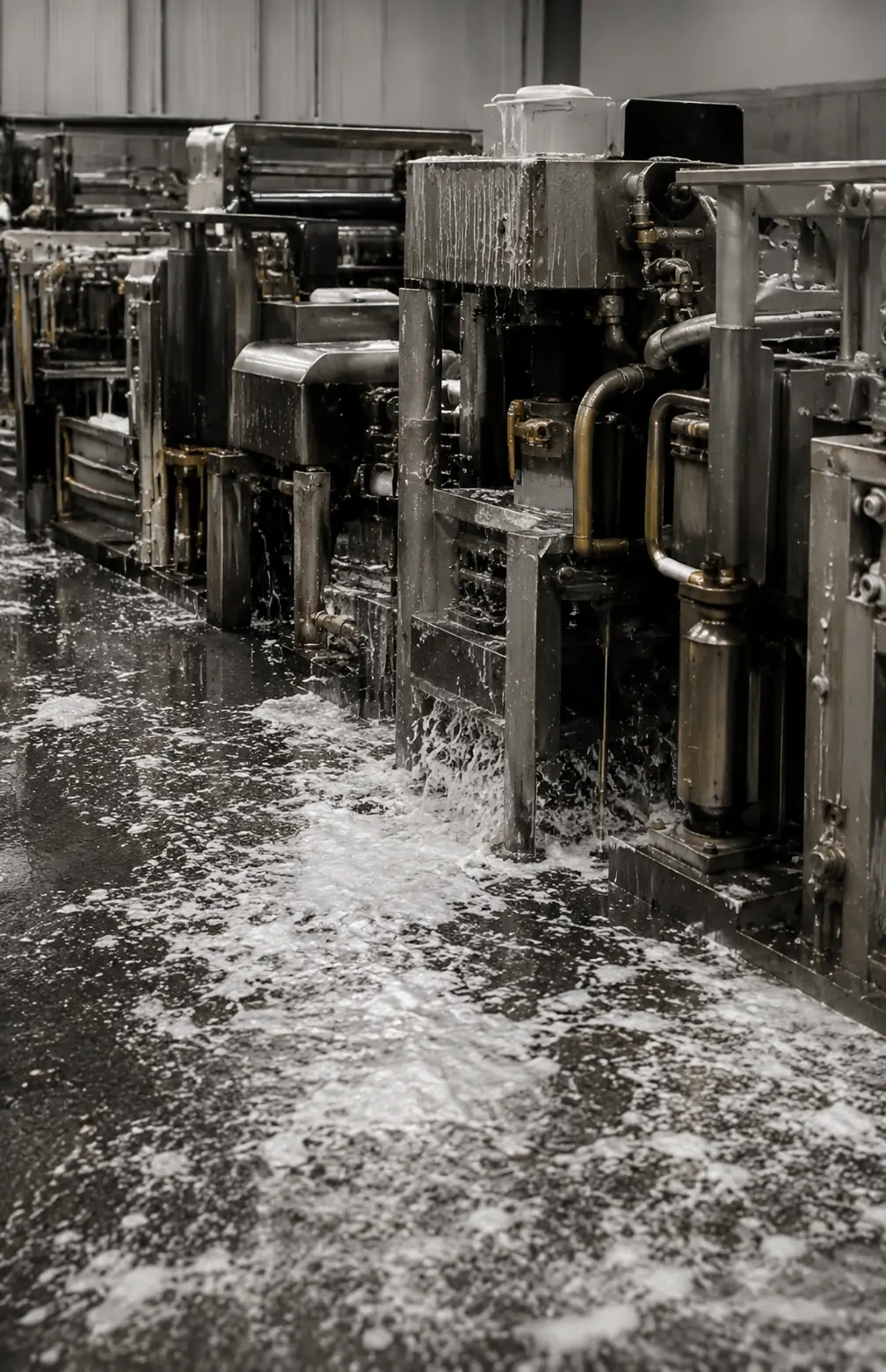
Selected plant fibres are blended to a controlled recipe, then pulped to prepare the base material.
02
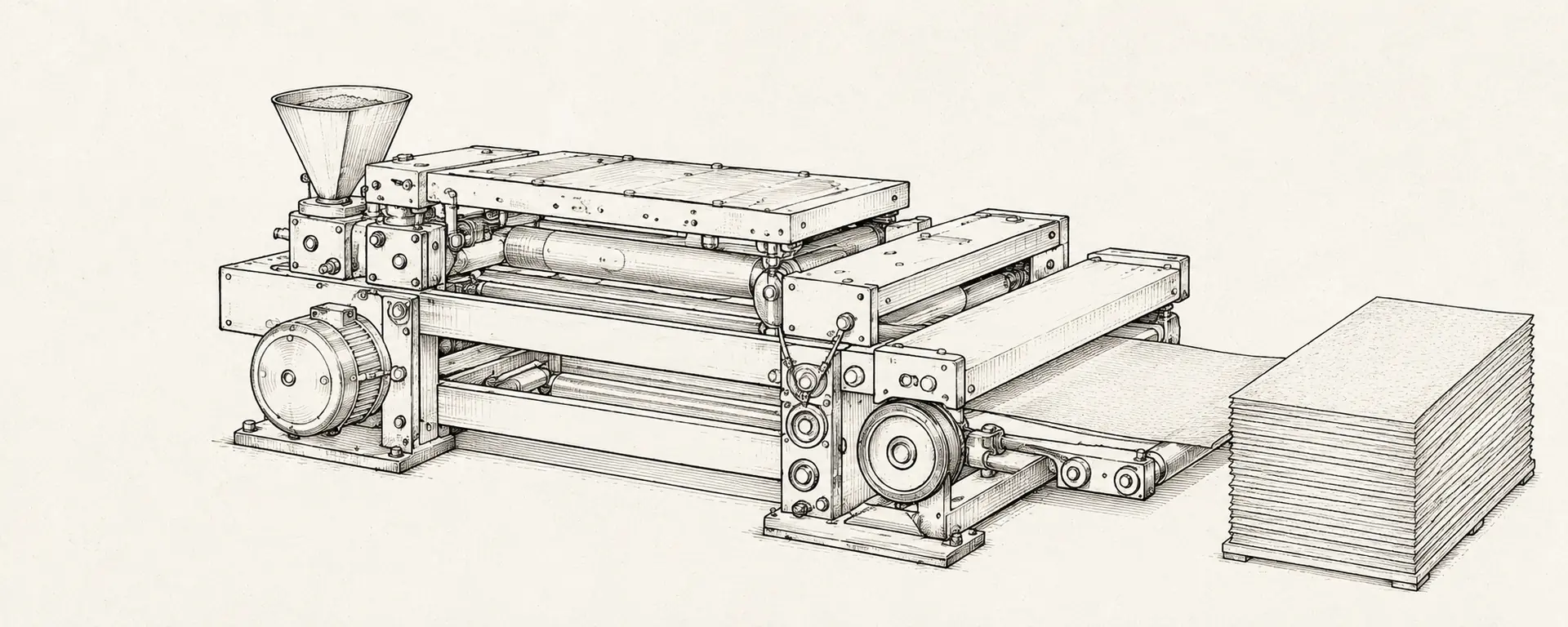
Composite Fibre Sheet Formation
The prepared fibre mix is formed into dense composite sheets suitable for dry-press conversion.
03
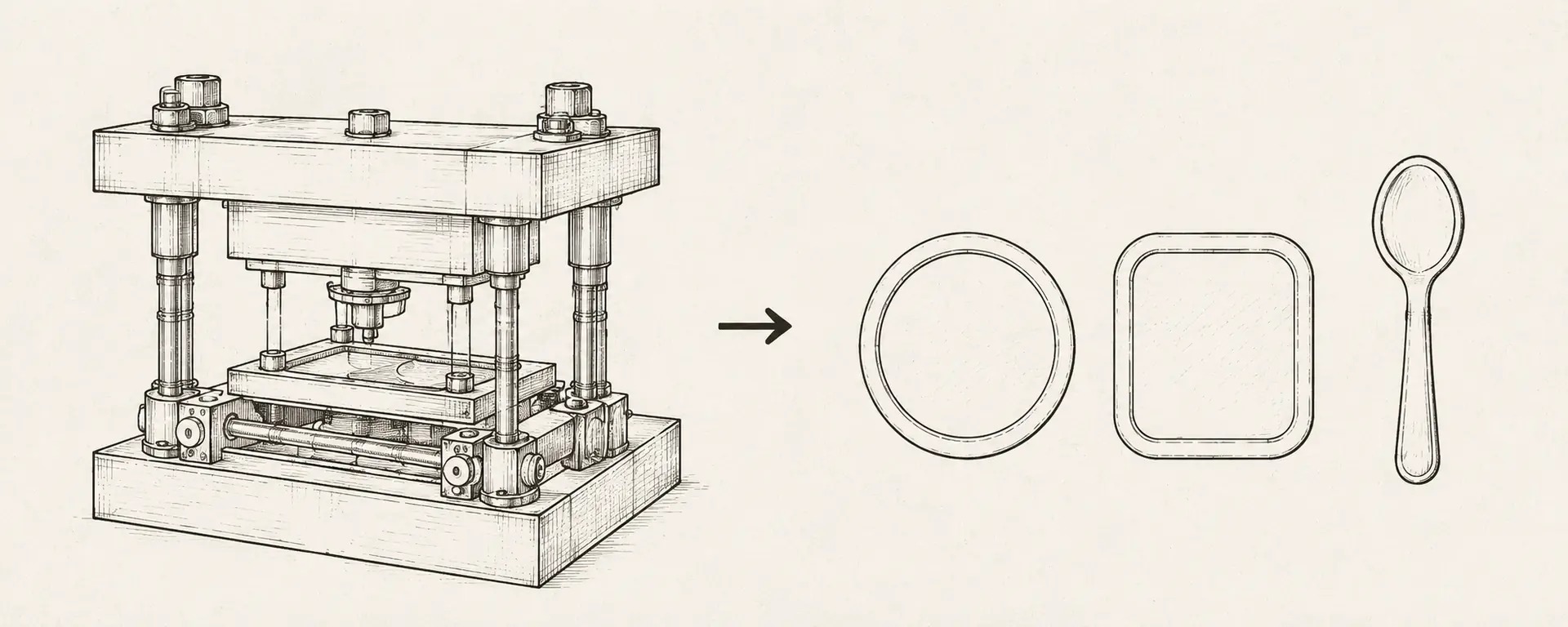
Sheet Blanking & Cutting
Fibre sheets are blanked and cut into precise preforms matched to product size and tooling.
04
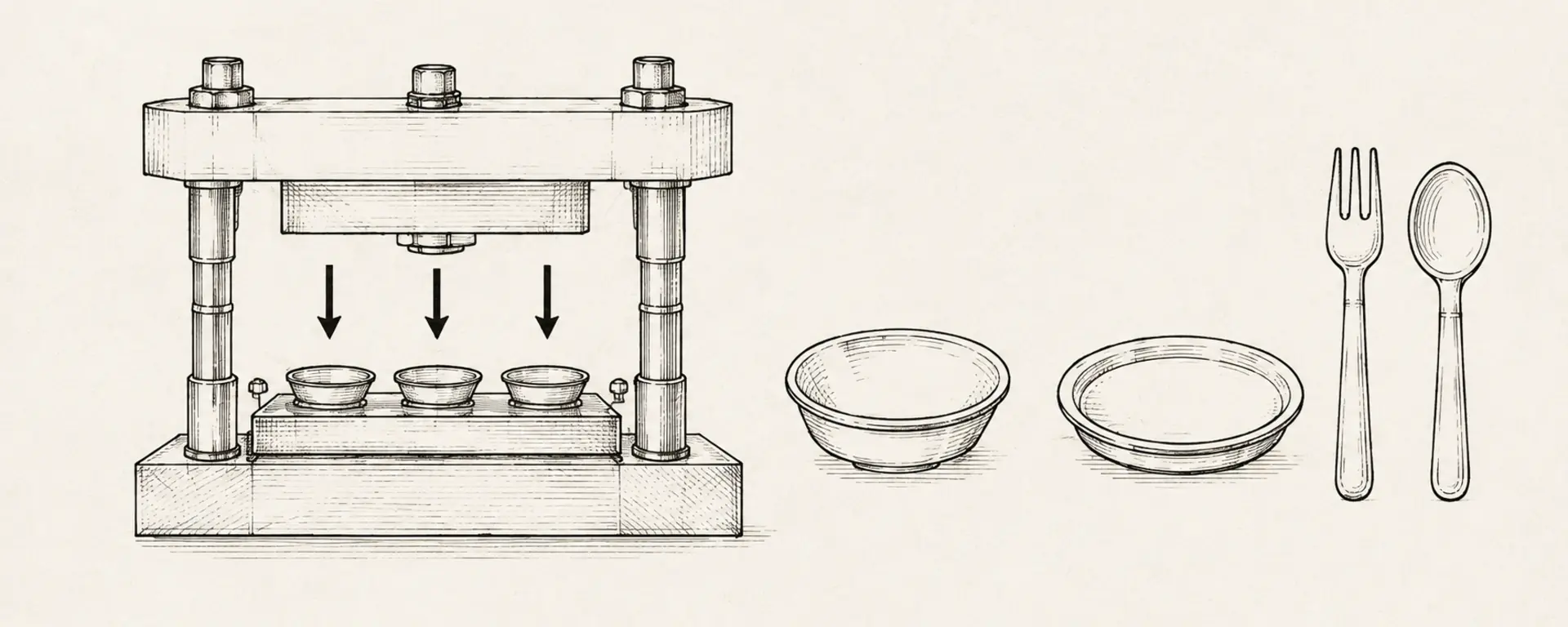
Hot-Press Forming
Controlled heat, pressure and moulds transform the preforms into final product geometry.
05
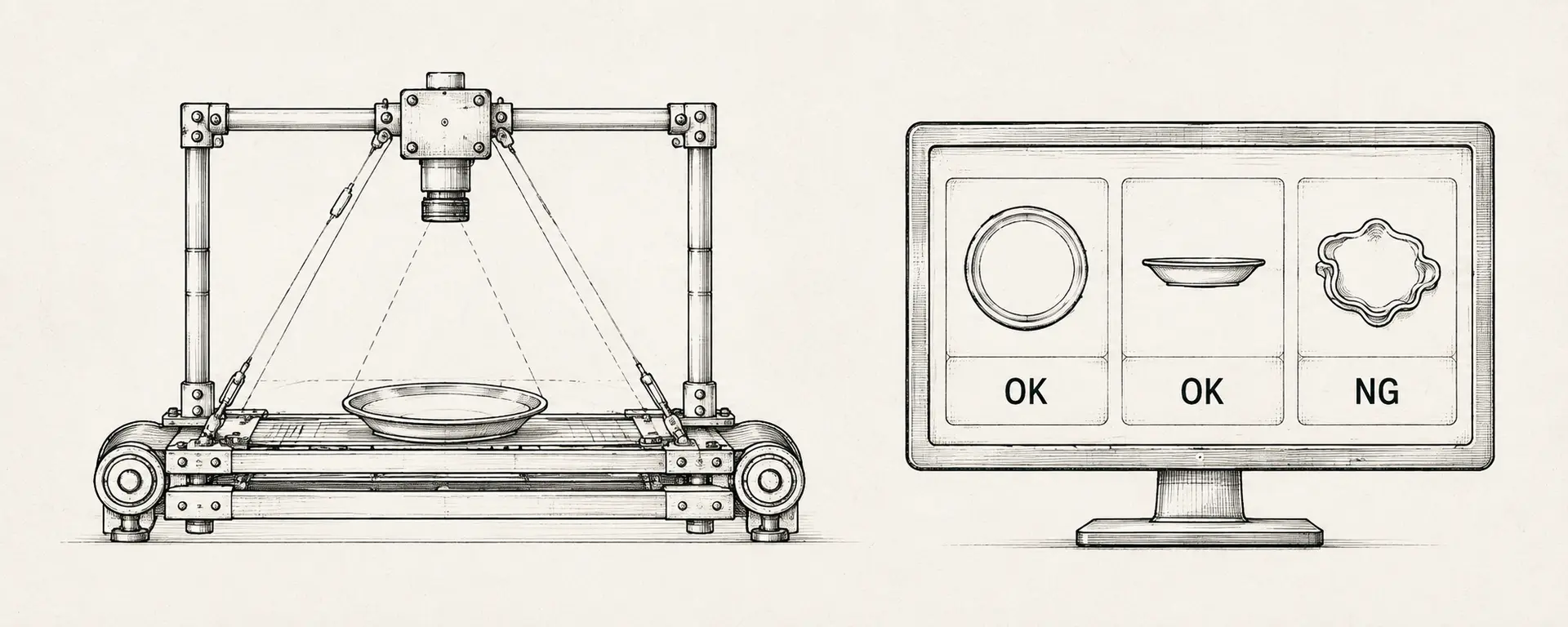
AI Vision Quality Inspection
AI vision systems inspect formed parts for appearance, dimensional consistency and detectable defects.
06
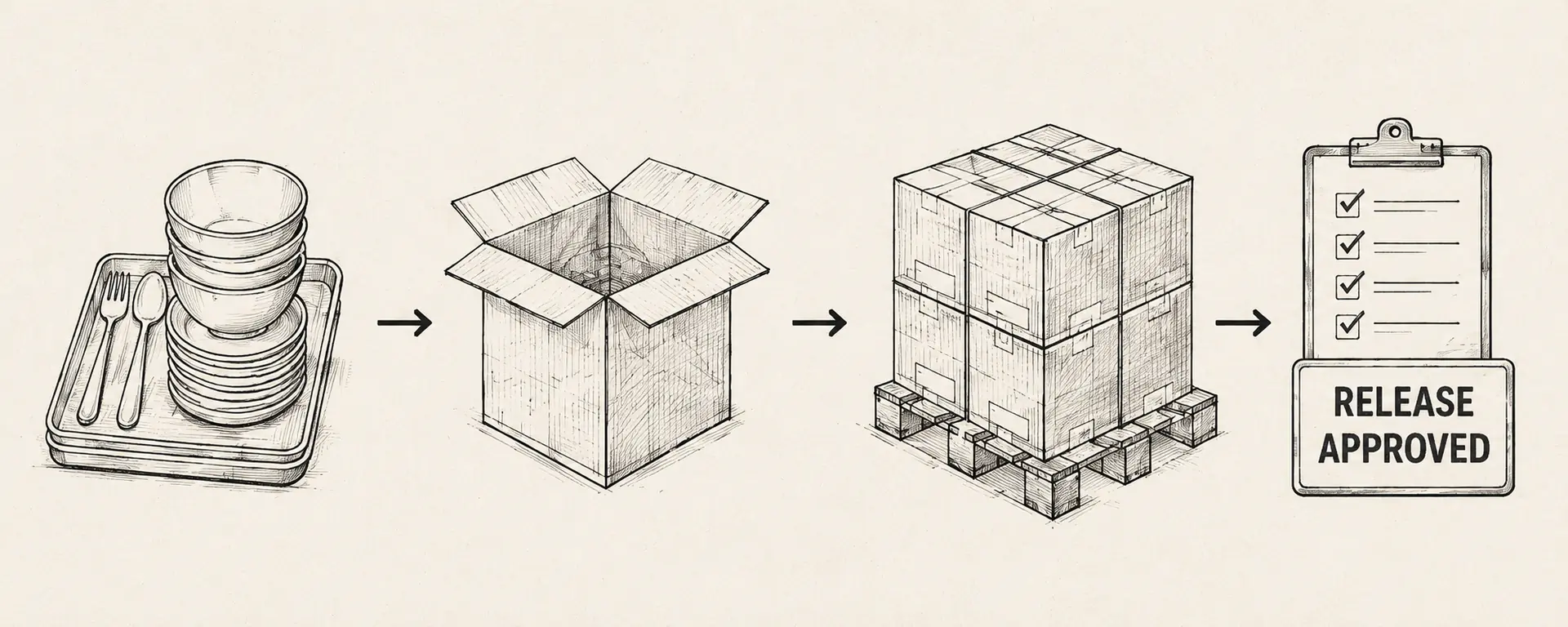
Packing & Final Release
Approved products are packed, checked and released for shipment.
Dry-Press Thermoforming vs Conventional Wet-Moulded Pulp
CONVENTIONAL WET-MOULDED PULP
Materials & Sustainability
Bagasse & Bamboo
Renewable fibers. Low carbon, naturally compostable.
Sugarcane Bagasse
Upcycled resource. Strong and clean.
PFAS Compliance
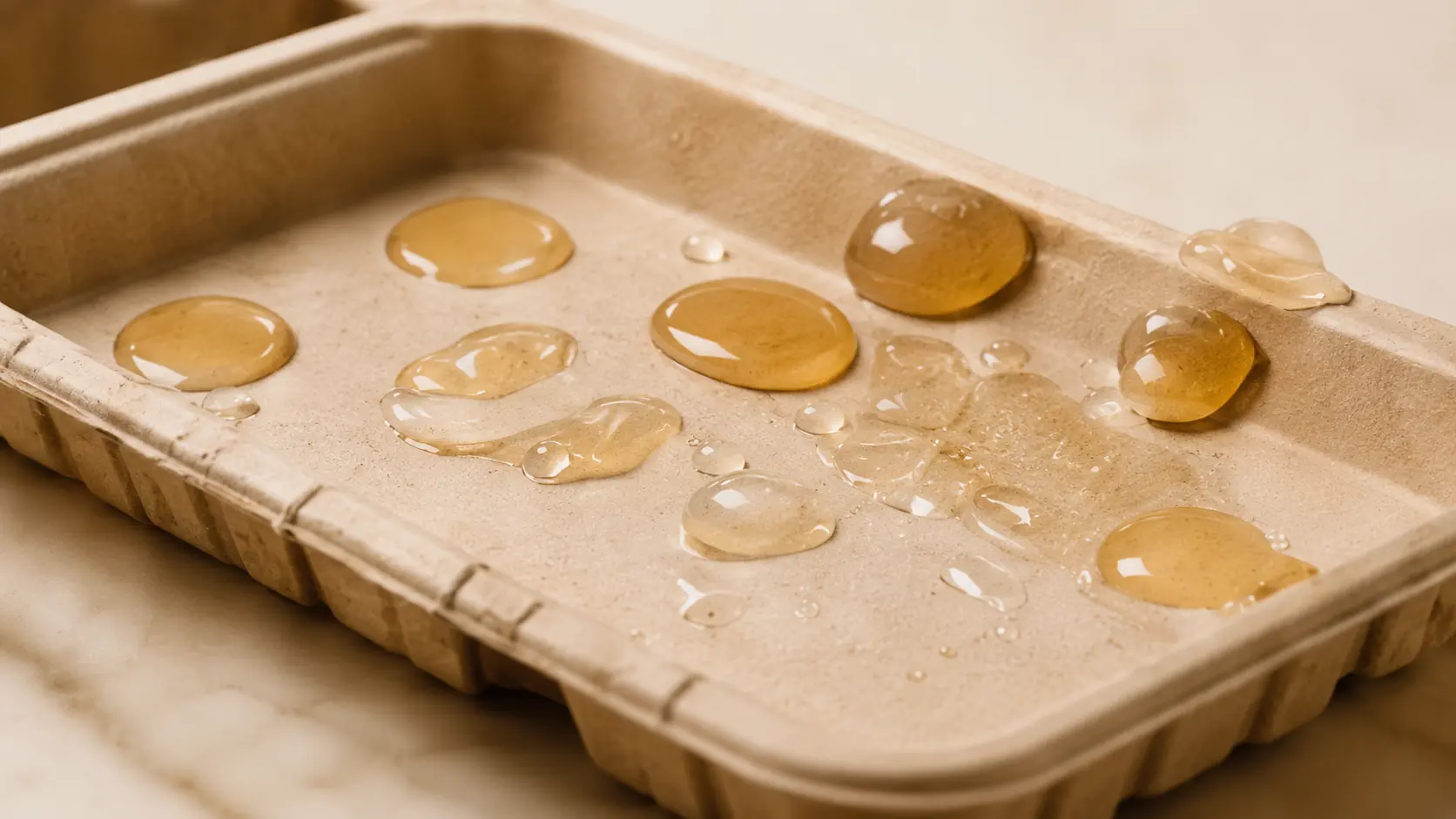
Our tableware is 100% PFAS-free and tested to meet strict global regulations for safety and the environment.
Supports EU
PPWR Documentation
CUSTOM OEM & MOULD SUPPORT
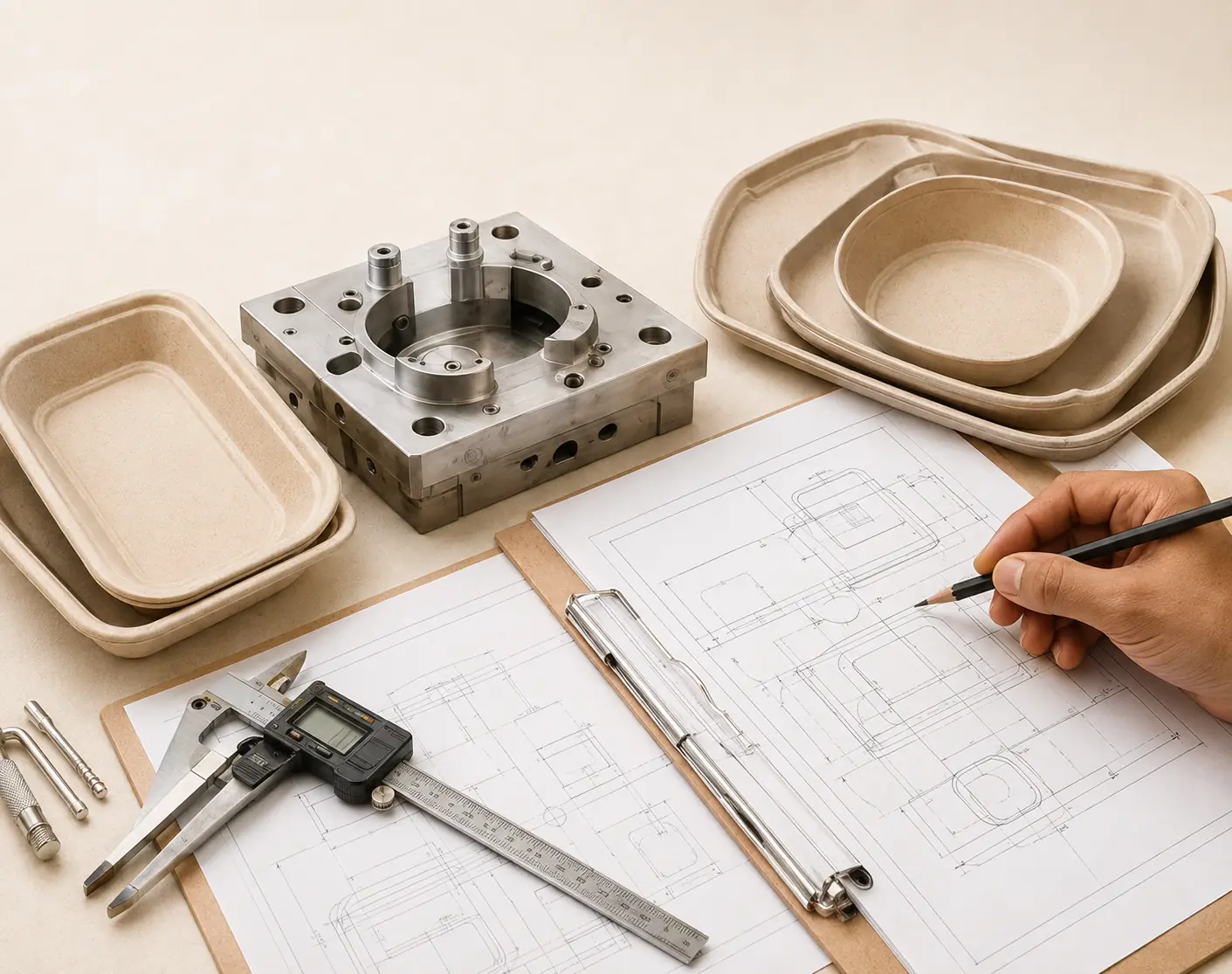
From Idea to Production-Ready Tooling
Design review, mould development, sampling and scalable production.
Concept review → Tooling → Sampling → Mass production
Discuss Your Product Requirement
Tell us what you are looking to produce. Early-stage ideas and incomplete specifications are welcome.
No obligation · Reply within 1 business day
Drawings are reviewed confidentially and used only for project assessment.